
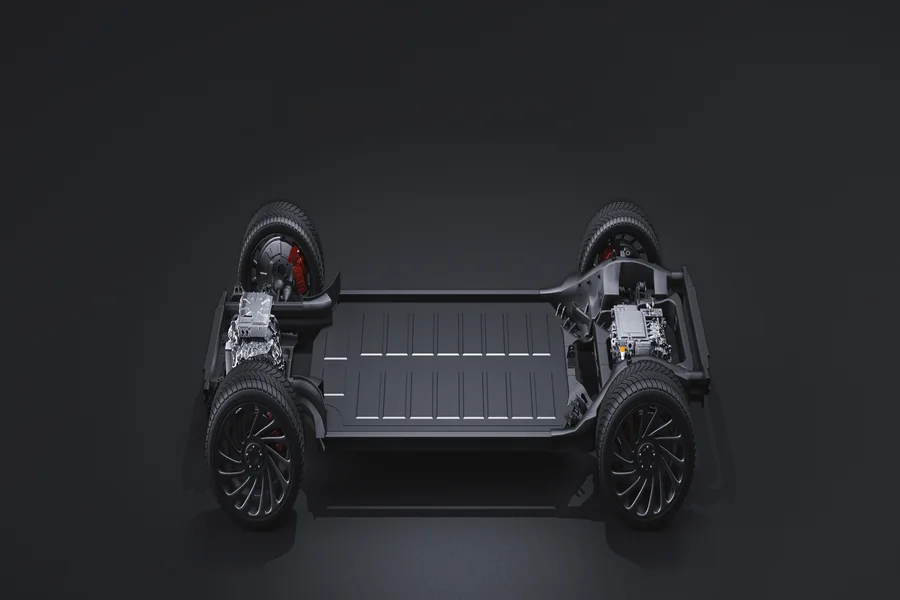
Range Extender Powertrain: Installation and Operations
Extended-range electric vehicles combine electric drive with onboard power generation to support journeys beyond the battery’s immediately available energy. A range extender powertrain must coordinate the generator, electric motors, power electronics, cooling, and vehicle energy management. Long-term performance is shaped by early decisions about layout, interfaces, and service. The strongest proposals connect product capabilities to a specific operating need instead of relying on broad claims. The central design task is to connect the selected equipment with a clear site requirement.
A visual reference for the system design discussed above.
Use evidence rather than headline figures
Published ratings are useful starting points, but they describe performance under defined test conditions. A project team should confirm the load, temperature, operating mode, measurement boundary, and configuration behind any important figure. Site-specific modeling and commissioning records are needed before a performance claim is treated as a project outcome.
Coordinate energy management with driving conditions
The control system has to respond to battery state of charge, vehicle speed, requested torque, temperature, and available generator output. A calibration that works well in one condition may behave differently during high-speed cruising or steep climbs. Validation should therefore cover representative routes and load profiles rather than a single laboratory point. For a closer look at the solution scope, review range extender powertrain and consider how its documented functions fit the site layout, electrical interfaces, and operating plan.
Plan manufacturing and service interfaces
An integrated powertrain still needs clear interfaces for vehicle assembly, software configuration, end-of-line testing, diagnostics, and field repair. Supplier documentation should identify connector types, coolant requirements, calibration versions, and service isolation points. Consistent production checks help ensure that each vehicle receives the intended configuration.
Consider noise, vibration, and harshness
The driver experiences the vehicle as a whole, not as a collection of components. Generator start-up, motor operation, gear meshing, cooling pumps, and structural vibration can all affect comfort. NVH engineering should be addressed early, with testing across different engine or generator states and road conditions. Performance should always be assessed against the actual installation conditions and the complete system boundary.
Integrate generation with the electric drive
The generator, power electronics, battery, and traction motors must operate as a coordinated system. Control logic determines when the range extender starts, how much power it supplies, and how energy is allocated between propulsion and battery charging. A well-integrated architecture avoids treating the generator as an isolated engine package and considers the vehicle’s full operating cycle. A project specification for range extender powertrain should identify the applicable configuration, installation limits, commissioning checks, and service responsibilities.
Understand the role of the range extender
An extended-range electric vehicle is driven by electric motors, while an onboard generator can supply electrical energy when the battery’s available charge needs support. The range extender is therefore part of an electric power system rather than a conventional mechanical drivetrain. Its value depends on how smoothly generation, battery management, and traction demand are coordinated.


