
EV Fast Charging Design for Busy Public Locations at Scale
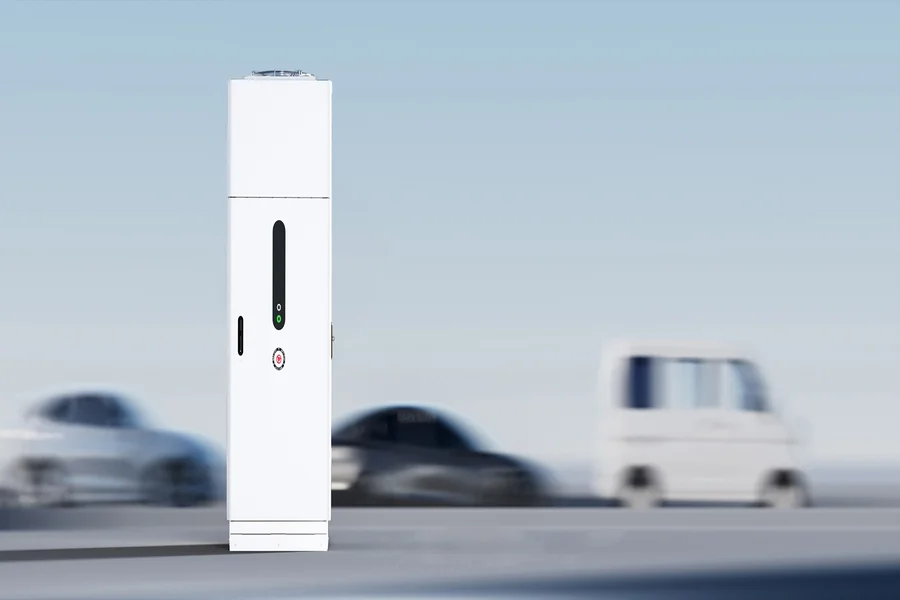
At roadside charging plazas, drivers value predictable sessions, while operators must maintain a workable balance between charger occupancy and available grid capacity. For EV fast charging, system interfaces shape the real outcome. The FusionCharge liquid-cooled solution combines a DC power unit with charging dispensers and shared power management. Huawei describes a power-sharing matrix and DC-bus provisions for future energy storage coupling; the usable charging rate still depends on vehicle acceptance, site power, and environmental conditions.
What happens inside a DC charging system
A DC charging power unit converts utility-side energy and supplies controlled DC power through dispensers to vehicle batteries. In Huawei FusionCharge, power allocation is designed to be shared across charging outputs rather than rigidly attached to one parking bay.
The output current required by a vehicle changes during the charging session as battery state of charge and temperature evolve. A station controller must respect the vehicle-requested limits and charger safety constraints instead of maintaining peak current throughout the session.
Why liquid cooling matters
Huawei lists a liquid-cooled dispenser current of 800 A for its ultra-fast charging solution under specified conditions. Circulating coolant removes heat from high-current components and helps manage the thermal load in the cable and dispenser assembly.
Thermal sensors and protection controls are part of a charging system, not merely convenience features. If a component approaches its operating limit, equipment may have to reduce output or end the session according to its safety design.
Coordinate site power and storage
A charging facility can be planned around a utility connection, local switchgear, energy meters, and optional batteries or photovoltaic generation. The FusionCharge DC power unit provides a reserved DC-bus interface intended to support future energy storage coupling.
Where photovoltaic generation is available, site controls can coordinate its variable output with charger demand. This does not remove the need for grid studies, protection coordination, and a clear operating policy for low-solar periods.
For an expansion, the original utility application and cable route drawings should be checked before new stalls are promised. A larger set of dispensers may share the same power pool and therefore change peak-hour experience.
Design for a repeatable charging experience
Commercial deployment requires a traffic plan, electrical design, charging communications, payment integration, and a maintenance process. The charger itself is one part of a site that users judge by access, availability, and ease of use.
Commissioning should cover connector checks, communication negotiation with different vehicle types, protective shutdowns, and simulated simultaneous charging. This exposes problems that are unlikely to appear during a single demonstration session.
The engineering case for EV fast charging rests on coordinated power conversion, thermal management, grid demand control, and day-to-day serviceability. Measured demand, vehicle compatibility, and site conditions should guide the final equipment specification rather than a peak-power label alone. For EV fast charging, Any claimed benefit should be assessed under realistic loads, environmental conditions, and the local operating policy.


