
Comparing “Starry Night” and Iconic Night Sky Paintings
Vincent van Gogh’s “Starry Night” painting is arguably one of the most iconic depictions of the night sky in art history. Its swirling skies and vibrant colors have captivated viewers for over a century. However, Van Gogh’s masterpiece is not the only notable night sky painting. This article compares “Starry Night” to other famous night sky paintings, examining their unique features, techniques, and the artists’ intentions behind these celestial depictions.
Van Gogh’s “Starry Night”
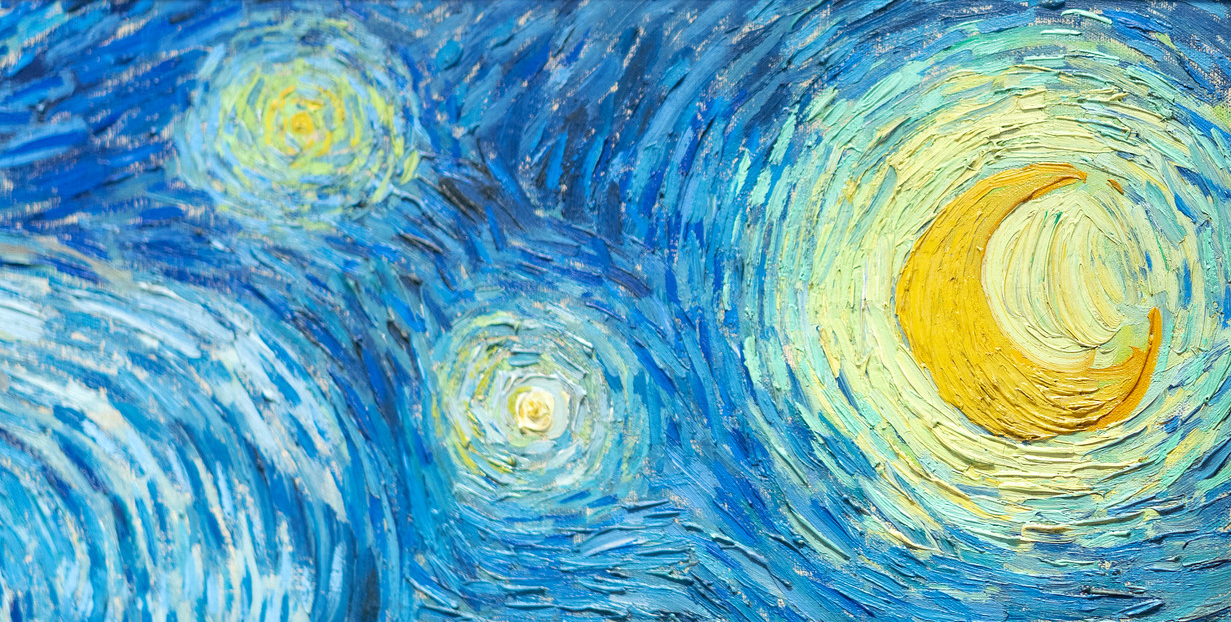
Painted in 1889, Van Gogh’s “Starry Night” is renowned for its emotional intensity and innovative style. The painting features a swirling sky filled with vibrant stars over a quiet town, with a prominent cypress tree in the foreground. Van Gogh created this piece during his stay at the Saint-Paul-de-Mausole asylum, capturing his internal turbulence and fascination with the night.
The use of bold, expressive brushstrokes and the vivid, contrasting colors set “Starry Night” apart. The swirling patterns in the sky are believed to represent Van Gogh’s mental state, creating a sense of movement and chaos that contrasts with the peaceful village below. The painting’s emotional depth and innovative technique have made it a cornerstone of post-impressionist art.
Comparison with Edvard Munch’s “Starry Night”
Edvard Munch, best known for “The Scream,” also created a piece titled “Starry Night” in 1893. Unlike Van Gogh’s dynamic and turbulent sky, Munch’s night sky is more serene and contemplative. His “Starry Night” features a calm fjord under a starry sky, with reflections of the stars on the water’s surface.
Munch’s approach to the night sky emphasizes tranquility and reflection, contrasting with Van Gogh’s emotional intensity. The stars in Munch’s painting are less prominent, blending gently into the night sky. This creates a soothing and meditative atmosphere, highlighting the different ways these artists interpreted the same celestial theme.
Comparison with James McNeill Whistler’s “Nocturne in Black and Gold”
James McNeill Whistler’s “Nocturne in Black and Gold: The Falling Rocket” (1875) is another significant night sky painting. Whistler’s work focuses on the atmospheric effects of fireworks over a night sky, capturing the fleeting beauty of the moment. His technique of using delicate brushstrokes and a limited color palette creates a dreamy, almost abstract representation of the night.
Whistler’s emphasis on mood and atmosphere parallels Van Gogh’s focus on emotional expression. However, while Van Gogh’s “Starry Night” painting uses bold colors and dynamic shapes to convey intensity, Whistler’s nocturnes are subtle and understated, relying on tonal variation to evoke a sense of calm and wonder.
Comparison with Albert Bierstadt’s “Evening Glow”
Albert Bierstadt, an American painter known for his landscapes, created “Evening Glow” in the 19th century. This painting showcases a majestic night sky over a mountainous landscape, with the glow of the setting sun casting a warm hue over the scene. Bierstadt’s meticulous attention to detail and use of light create a sense of awe and grandeur.
In contrast to Van Gogh’s emotional and turbulent sky, Bierstadt’s night sky is more about natural beauty and tranquility. His realistic depiction of the landscape and sky offers a stark contrast to Van Gogh’s expressive and subjective interpretation, highlighting the diversity in artistic approaches to the night sky.
Comparison with Georgia O’Keeffe’s “Starry Night”
Georgia O’Keeffe’s “Starry Night” (1963) is another notable interpretation of the night sky. O’Keeffe’s painting is characterized by its simplicity and focus on the essence of the scene. Her use of smooth lines and minimalistic composition creates a serene and almost abstract representation of the night sky.
O’Keeffe’s “Starry Night” contrasts with Van Gogh’s in its simplicity and abstraction. While Van Gogh’s painting is rich with detail and movement, O’Keeffe’s is calm and understated, focusing on the overall mood rather than specific elements. This difference underscores the varied ways artists can interpret and depict the same subject matter.
Conclusion
Comparing Vincent van Gogh’s “Starry Night” painting to other famous night sky paintings reveals the rich diversity in artistic interpretations of the night sky. From the emotional intensity of Van Gogh’s swirling skies to the tranquil reflections in Munch’s fjord, the atmospheric subtlety in Whistler’s nocturnes, the majestic natural beauty in Bierstadt’s landscapes, and the minimalist serenity in O’Keeffe’s work, each painting offers a unique perspective on the celestial theme.
These comparisons highlight the versatility of the night sky as a subject in art, capable of conveying a wide range of emotions, moods, and artistic visions. Whether through bold expression, serene contemplation, atmospheric effects, or natural beauty, each artist’s interpretation of the night sky adds to the rich tapestry of art history, offering viewers diverse and profound experiences of the nocturnal world.


